


Standing for the Truth
Recently, disturbing developments from Kilifi County have reignited fears that the horror of the Shakahola tragedy may not be over — and they raise a deeply important question about integrity in leadership.
Almost two years since the horrifying discovery of mass graves in Shakahola forest, there are renewed cases of cult practices after authorities recovered one body and rescued four emaciated individuals, just a few kilometres from the original Shakahola site. Even more unsettling is that among those arrested are a husband and wife who are former victims of the Shakahola cult — rescued in 2023, but who later vanished from their home in Siaya County and returned to the forest.
Further away, Jim Jones orchestrated the largest intentional loss of American civilian life before the September 11 attacks. As leader of the Peoples Temple, he caused the “Jonestown Massacre” — one of the most tragic mass suicides in modern history. On November 18, 1978, under his command, over 900 people died — most by drinking a cyanide-laced drink. This included over 300 children.
You may be asking: “What does this have to do with me?”
We are instructed to keep gathering together in worship of the one and only true God. However, the emergence of cultic activities such as these mass suicides can justifiably lead to more regulation of churches and religious organizations, and a clamp down on the freedom of worship. It can become illegal to gather and worship the true God.
We need to shun cults. But it is not enough to merely shun them — we must also call them out for what they are.
“Cults revolve around a personality. To shun them, we need to ask ourselves: are we above reproach ourselves? Are we embracing mindsets and habits that will cause our followers to be drawn to our personalities rather than to Christ?”
There is a high chance that the faithful in these unfortunate incidents followed these leaders blindly unto their own deaths because they assessed them purely from the lens of charisma — and threw the need for integrity through the window, with fatal consequences.
This poses a critical question: Can we recognize a leader who may take his or her followers to such devastating ends? Do we take every leader at face value? Does the leader embody and exemplify what is true? A closer look at what these cult leaders held dear — their values, beliefs, attitudes, track record, and accountability structures — could have avoided the unnecessary deaths.
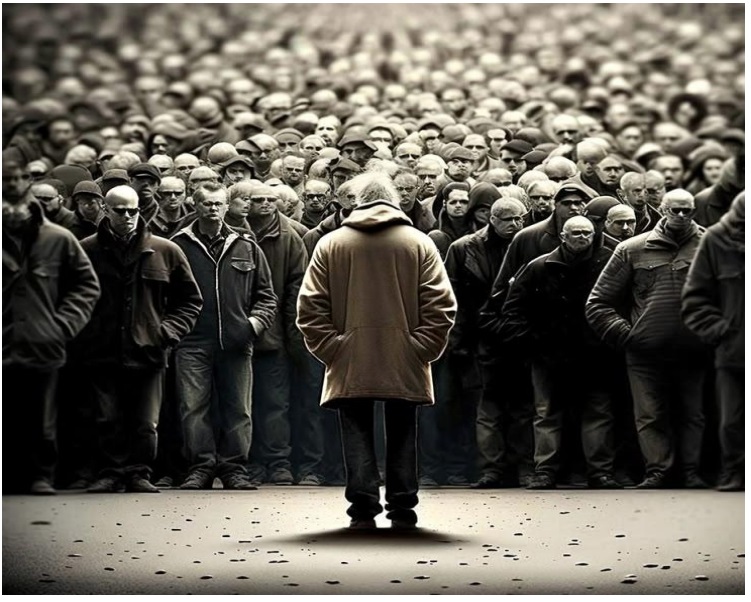
Biblical Criteria for Selecting Leaders
As believers in Christ, we are expected to participate in selecting leaders and use biblical criteria in doing so:
-
Is the aspiring leader driven by a desire to serve?
Matthew 20:26-28 — “…whoever desires to become great among you, let him be your servant… just as the Son of Man did not come to be served, but to serve…” -
What is his or her track record?
Luke 16:10 — “Whoever can be trusted with very little can also be trusted with much… and whoever is dishonest with very little will also be dishonest with much.” -
Does he or she appreciate authority, accountability, and teamwork?
1 Timothy 3:2-5 — “Therefore an overseer must be above reproach… sober-minded, self-controlled, respectable… not quarrelsome…”
Integrity in Public Begins in Private
Standing for the truth in public is preceded by standing by the truth in our private lives. America’s Bill Clinton’s presidency was a paradox of success and personal scandal. He delivered economic growth, reduced deficits, and left office with high approval ratings. However, the Monica Lewinsky affair and impeachment proceedings cast a lasting shadow over his legacy — deeply influencing political discourse, media coverage of politicians, and public attitudes toward private morality in public leadership.
Cults are often rooted in manipulation, falsehoods, and distortion of truth. Speaking against them means choosing truthfulness — a core pillar of integrity.
Many cults prey on the emotionally, mentally, or spiritually vulnerable. Integrity demands that we stand up for those who can’t defend themselves. Exposing spiritual, psychological, or physical abuse within cults requires boldness. True integrity involves moral courage — especially when it might cost relationships, status, or safety.
Cults often glorify a single, authoritarian leader. Speaking out promotes accountable, ethical leadership — an integrity-based model aligned with biblical values.
Remaining silent in the face of harm is a form of complicity. Integrity involves choosing responsibility over silence, even when others look away.
Cults often suppress questions, doubts, and independent thought. Integrity fosters open dialogue, education, and accountability. We must therefore endeavour to educate others on the hallmarks of cults and cultic leaders — knowing that Christ is making His appeal to the world through each believer.
“Integrity is about doing what is right, standing for truth, and protecting others — even when it is unpopular or risky. Will you be counted among those who speak the truth of the gospel boldly?”
— Harold Orambo, ASLEAD Institute
Lead with Integrity
Develop the Character to Lead Boldly and Truthfully
Join ASLEAD Institute and build the values, convictions, and courage to lead with integrity in every sphere of life.
